Le 19 October 2026
Ten years after completion of the Escondida Water Supply project, Geocean looks back at one of its landmark projects in Chile. Delivered for BHP Billiton between 2014 and 2016, this EPCI project covered the design, construction and installation of marine infrastructure supplying seawater to a desalination plant serving the mining operations in Antofagasta.
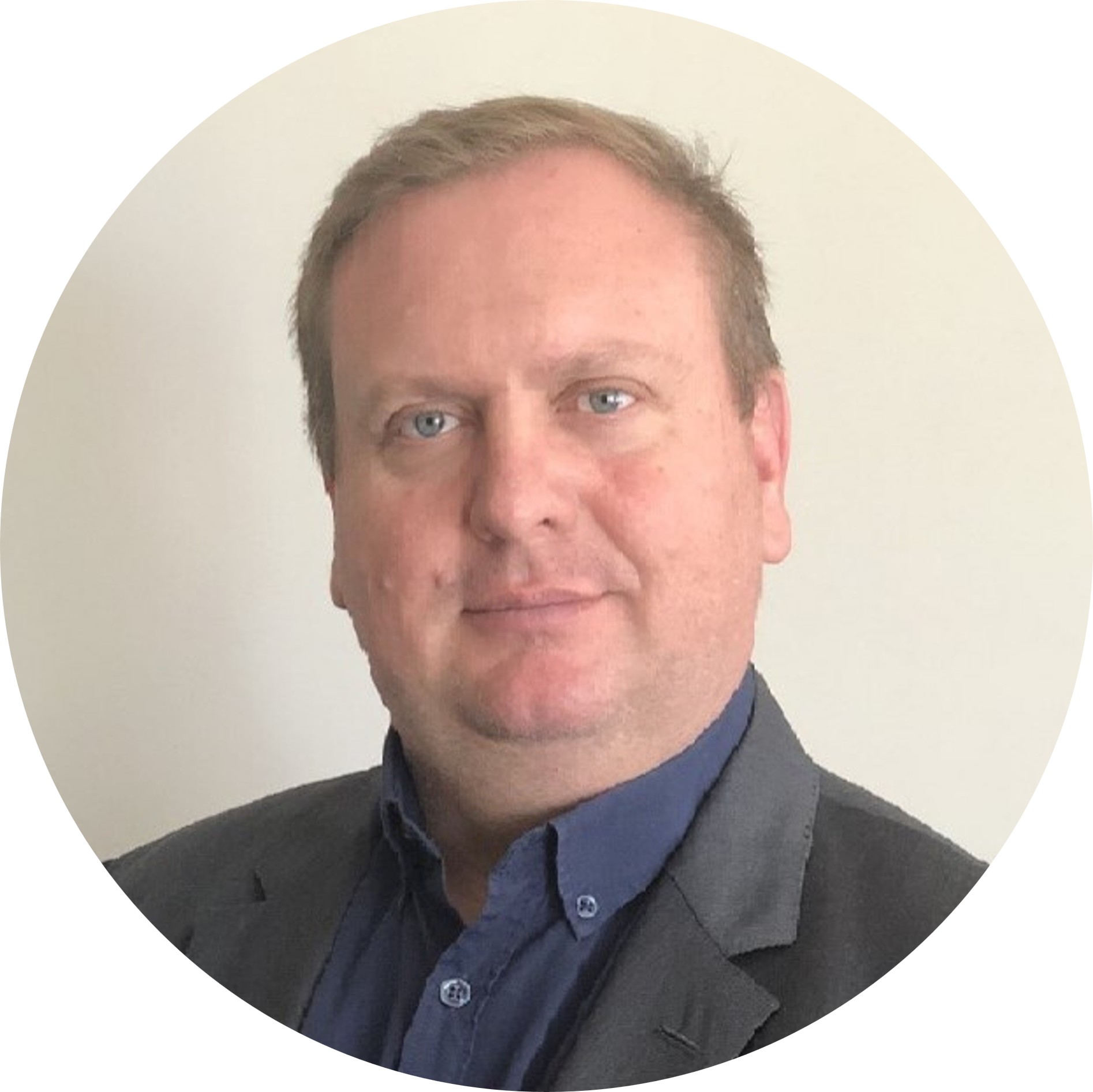
Beyond the technical information already presented in the project profile, this interview gives the floor to Christophe Sitta, a member of the Geocean project team. With the benefit of hindsight, he reflects on this demanding project, the site constraints, the need to adapt to a new environment and the lasting impact that this type of experience has on a team.
I remember an intense, highly demanding project that required a strong on-site presence and the ability to adapt quickly. I joined the project at a pivotal stage, when our installation methods were finally about to be tested under actual offshore site conditions. We needed to prepare and coordinate the equipment and upcoming operations.
The team needed fresh input, and the Project Manager already in place needed support as the offshore operations gathered pace. This was not a project that could be managed remotely.
What stays with me is the constant need to understand the context: the country, the client, local working practices, technical constraints and the teams already in place. We had to understand how the operations had been prepared and determine how the risks could be mitigated.
You do not simply arrive and apply a standard method. You enter an established project environment and joint venture, with people who have already been working together for months and stakeholders with their own logic, culture and ways of working. You need to listen, integrate into the team and demonstrate how you can help. Only then can you establish the right pace and move the project forward rigorously and safely, while maintaining a high standard of execution.
The objective was to supply seawater to a desalination plant serving the mining operations. In this arid region of Chile, water is clearly a critical issue. The aim was not simply to convey water to an industrial facility located far inland. It was also to prevent the copper mine from drawing water from the surrounding groundwater resources.
The marine infrastructure was therefore essential. Without it, the plant could not operate in line with this environmental improvement objective. As part of a consortium comprising three entities, Geocean was responsible for the marine scope: the intake lines, the outfall line, the intake structures and the diffuser structures. Much of the project’s complexity was concentrated at this land–sea interface.
Several challenges came together. Shafts had to be constructed in the seabed to recover the microtunnelling machines used to excavate the three tunnels connecting the shore to the sea.
The drilling locations had to be selected on the seabed to provide the best possible conditions for recovering the microtunnelling machines. Seabed preparation and clearance operations were carried out using our remotely operated subsea excavator, ABYSS. This work took place in hard, irregular ground created by the highly active geological processes affecting this section of the Andes.
In addition to these constraints, the drilling operations had to meet strict tolerances and positioning requirements. This level of accuracy is characteristic of projects in which works carried out from shore must connect with infrastructure installed offshore, with decimetre- or even centimetre-level precision.
The shafts were also used to house part of the intake infrastructure, protecting it against the frequent seismic activity in this part of the world.
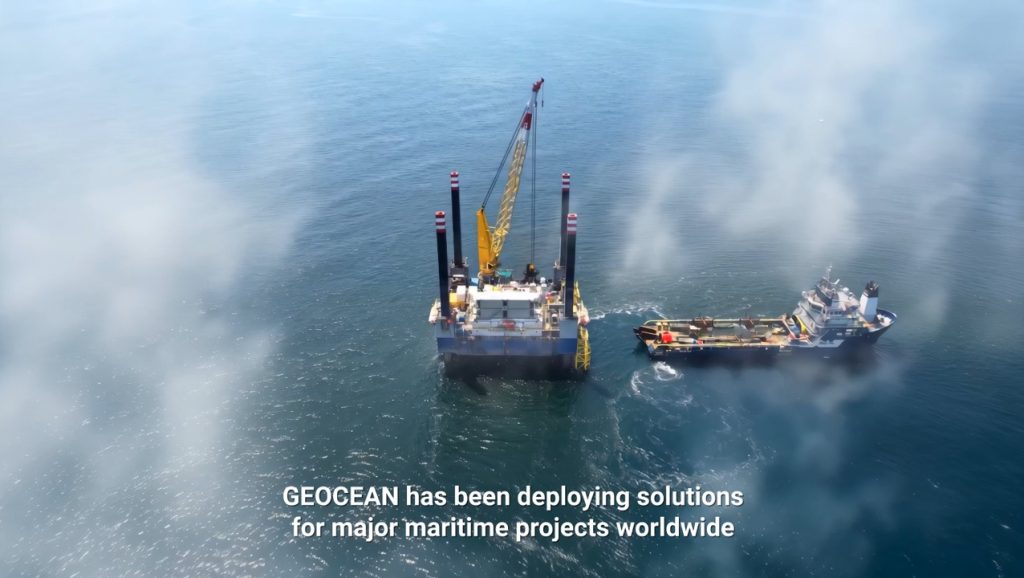
The marine operations added another layer of complexity. A jack-up platform had to operate on hard ground, very close to shore and therefore highly exposed to sea conditions and waves coming in from the Pacific.
The installation of the intake heads and outfall head also involved heavy lifts. These structures comprised several sections that had to be carefully positioned, one element at a time, onto components that had already been installed and secured to the seabed.
All of this had to be carried out without a direct view of our movements, which were monitored using remotely operated underwater vehicles. Each operation depended on the one before it. When some components are embedded in the ground and others are installed on the seabed, coordination becomes critical. Even the slightest inaccuracy can affect every subsequent stage.
Chile is a seismic region. This is a major consideration when designing and installing infrastructure of this kind. The intake heads had to be embedded and anchored in a way that accounted for the potential acceleration forces generated by an earthquake. Pre-tensioned and grouted anchors were used to stabilise and reinforce the structures.
Geotechnical conditions were also a major factor. The ground was hard, the vertical drilling works were extensive, and the interfaces between rigid structures embedded in the ground and more flexible elements installed on the seabed required particular attention.
These issues may appear highly technical, but on site they determine the entire installation methodology and the associated verification stages.
The intake heads and diffuser were among the most sensitive operations. The intake heads comprised several components, including a section embedded in the shaft and a ‘cap’ positioned above the natural seabed level. These were heavy components that had to be installed methodically and accurately.
Installing the diffuser also required a high degree of control, particularly for the connections and alignments. In operations of this kind, the specially designed and manufactured tools, assembly trials, fabrication monitoring, transportation and offshore installation all form part of a single process.
Success is not determined solely during installation. It is prepared long beforehand through the design of the installation tooling, the planning of each sequence and the ability to anticipate potential difficulties.
First, it demonstrates our ability to adapt. Every project has its own constraints, but Antofagasta required adaptation at several levels: technical, geographical, cultural and organisational. We had to work with partners, local teams and specific marine assets while maintaining a consistently high level of performance.
It also demonstrates the importance of teamwork. On a project of this kind, no one succeeds alone. Teams must be able to prepare, verify, adjust and make decisions. Coordination between engineering, methods, construction, partners and the client is continuous. This is often where the true performance of a project is determined.
With ten years of hindsight, I would say that early-stage preparation is critical. The more constrained a project is, the earlier the installation methods, safety requirements, offshore operations and interfaces must be considered. Some complexities only become fully apparent once work begins on site. This is precisely why lessons learned are so valuable.
I also believe that a difficult project is more than simply a challenge to overcome. It is an experience that builds a team, improves working methods and strengthens project culture. Antofagasta is one of those projects that reminds us that, at sea and in demanding environments, technical expertise alone is not enough. Humility, listening and a genuine on-site presence are equally essential.
Conclusion
The Escondida Water Supply project illustrates Geocean’s ability to operate in highly constrained environments at the interface between land and sea. Ten years on, the project remains a valuable source of lessons learned, highlighting adaptation, precision of execution, coordination and collective learning.
It is also a reminder that the most demanding marine projects are built not only through technical expertise, but also through the commitment of the teams working on site.
” On a project such as Antofagasta, success is prepared through attention to detail, but it is above all built on site, alongside the teams,” concludes Christophe Sitta.
Le 19 October 2026
Do you have a cooling and heating project? an offshore terminal decommissioning project? a gas terminal project?
Geocean, specialist in marine works, carries out your projects worldwide.