
Le 20 January 2026
In maritime and offshore environments, workplace well-being is not simply an HR policy. It plays out every day on deck, under an unforgiving sun, in climatic conditions that leave no room for approximation.
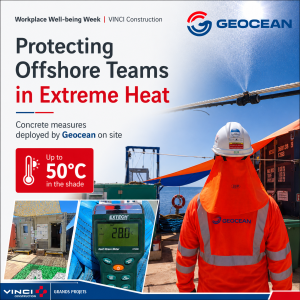
As part of the Workplace Well-being Week, initiated by VINCI Construction, from 15 to 19 June 2026, Geocean is highlighting the measures implemented on its worksites to protect the health of its teams in a concrete, operational way. Because on a barge at sea, taking care of people also means ensuring safety, quality of execution, and project performance.
On Geocean’s maritime and offshore worksites, exposure to heat-related risks is not a theoretical issue. It is measured by hours spent outdoors, by perceived temperatures on overheated metal decks, and by accumulated fatigue under continuous solar radiation.
During the summer, some work areas can reach 48-50°C in the shade. Under such extreme conditions, work organisation, sun protection, hydration and heat management become safety issues in their own right.
Teams operate in environments that land-based worksites do not always replicate: no natural shade, prolonged exposure to wind and sun, isolation, continuous operations, and activities carried out near water or on metallic structures. Personal protective equipment, which is essential for safety, can also increase thermal discomfort if not properly fitted.
It is within this context that Geocean has developed an operational response, directly shaped by field realities.
In response to these constraints, Geocean has implemented a set of measures structured around three priorities: sun protection, thermal comfort and hydration.
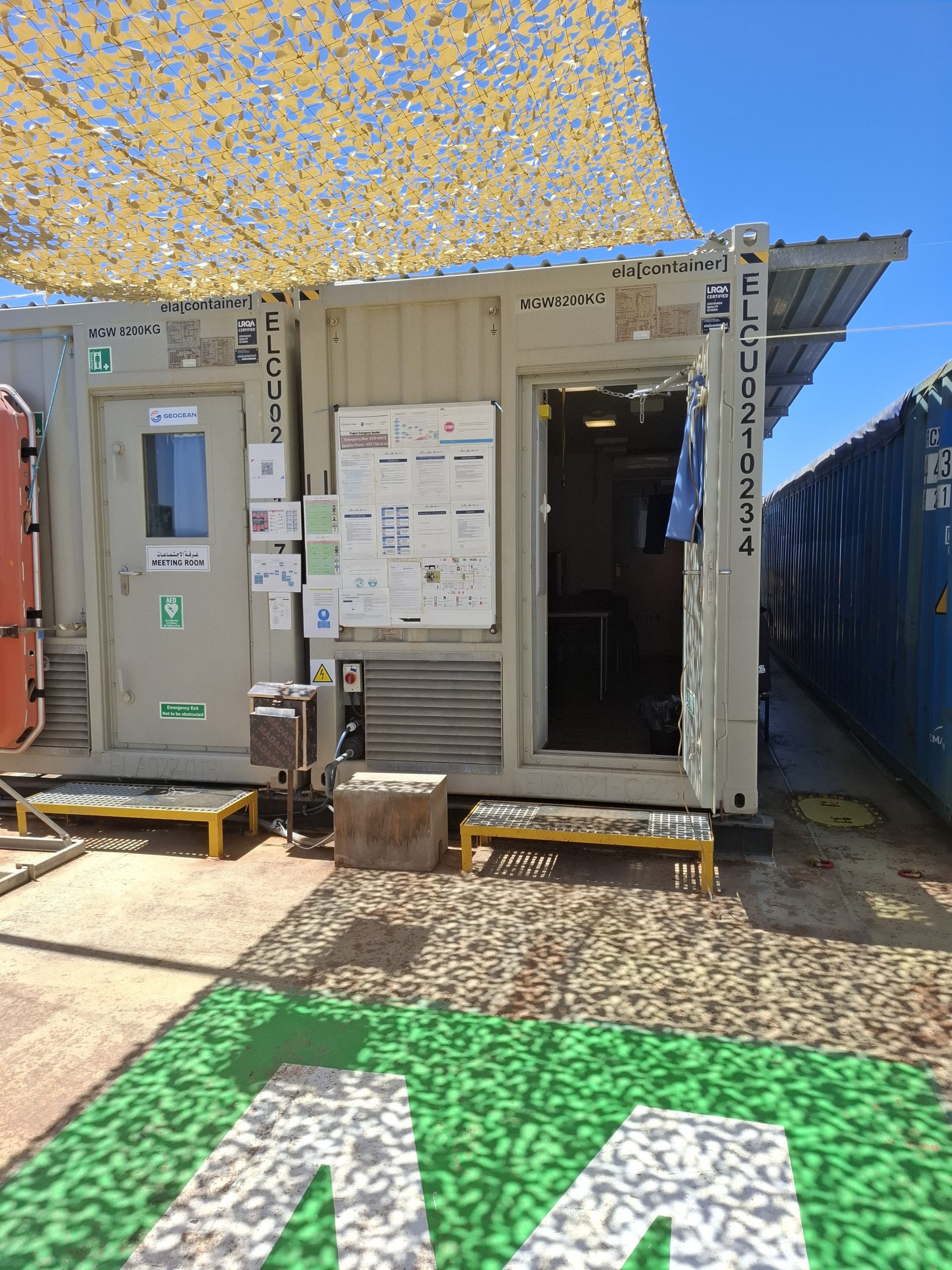
Shade canopies have been installed on the barge to create permanent shaded areas. They allow teams to limit their exposure during the most critical periods of the day.
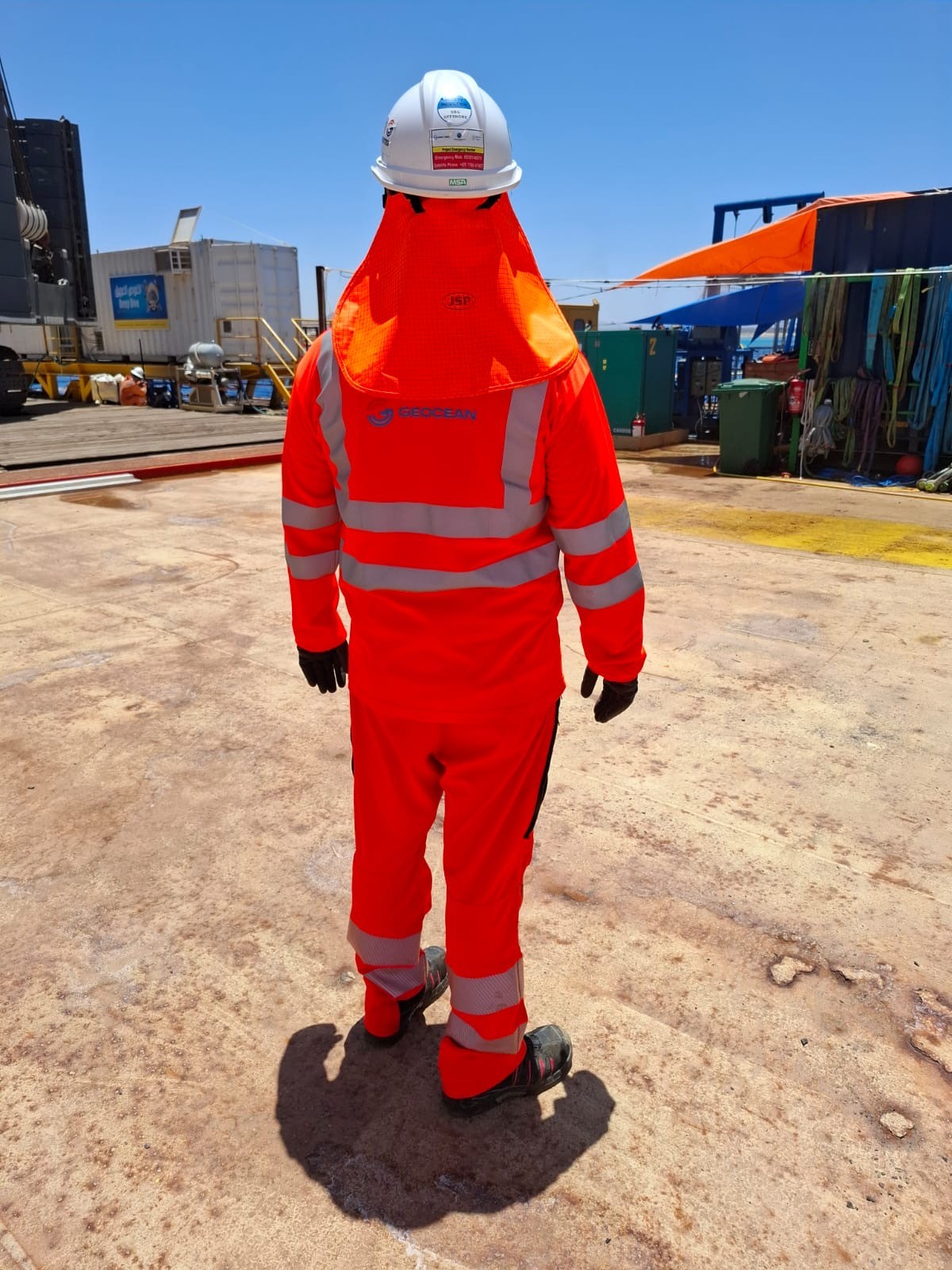
In addition, each employee has been equipped with a helmet fitted with a neck flap, helping to reduce exposure of the most sensitive areas — the neck, nape and face — to direct UV radiation
Reducing perceived heat
The barge deck has been painted in a light colour to limit heat accumulation through radiation. This simple measure helps reduce surface temperature and improve working and movement conditions on deck.
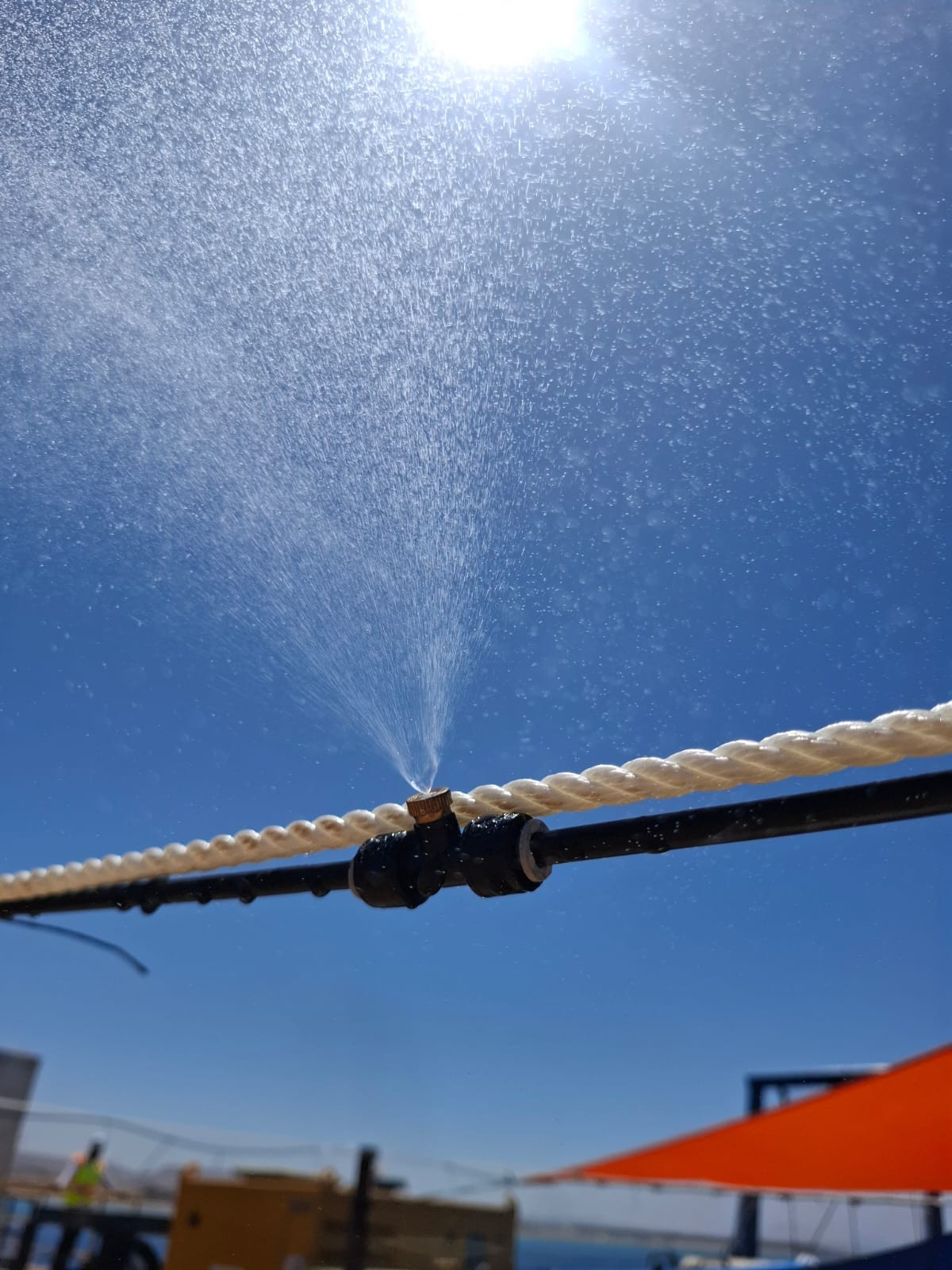
A misting system has also been deployed in specific work areas. Its use is strictly targeted: misting devices are activated only during the hottest hours of the day, when their effect is most useful in reducing perceived temperature and protecting teams.
This approach provides an effective response to heat stress while ensuring measured water use — a key consideration in an environment where resources must be carefully managed.
Personal protective equipment has also been adapted. Ventilated PPE now makes it possible to combine safety requirements with thermal comfort, without compromising either.
Water stations enriched with electrolytes have been installed across work areas. Beyond simply providing access to hydration, this measure addresses a specific physiological need: in high-heat conditions, the loss of mineral salts accelerates fatigue and reduces alertness.
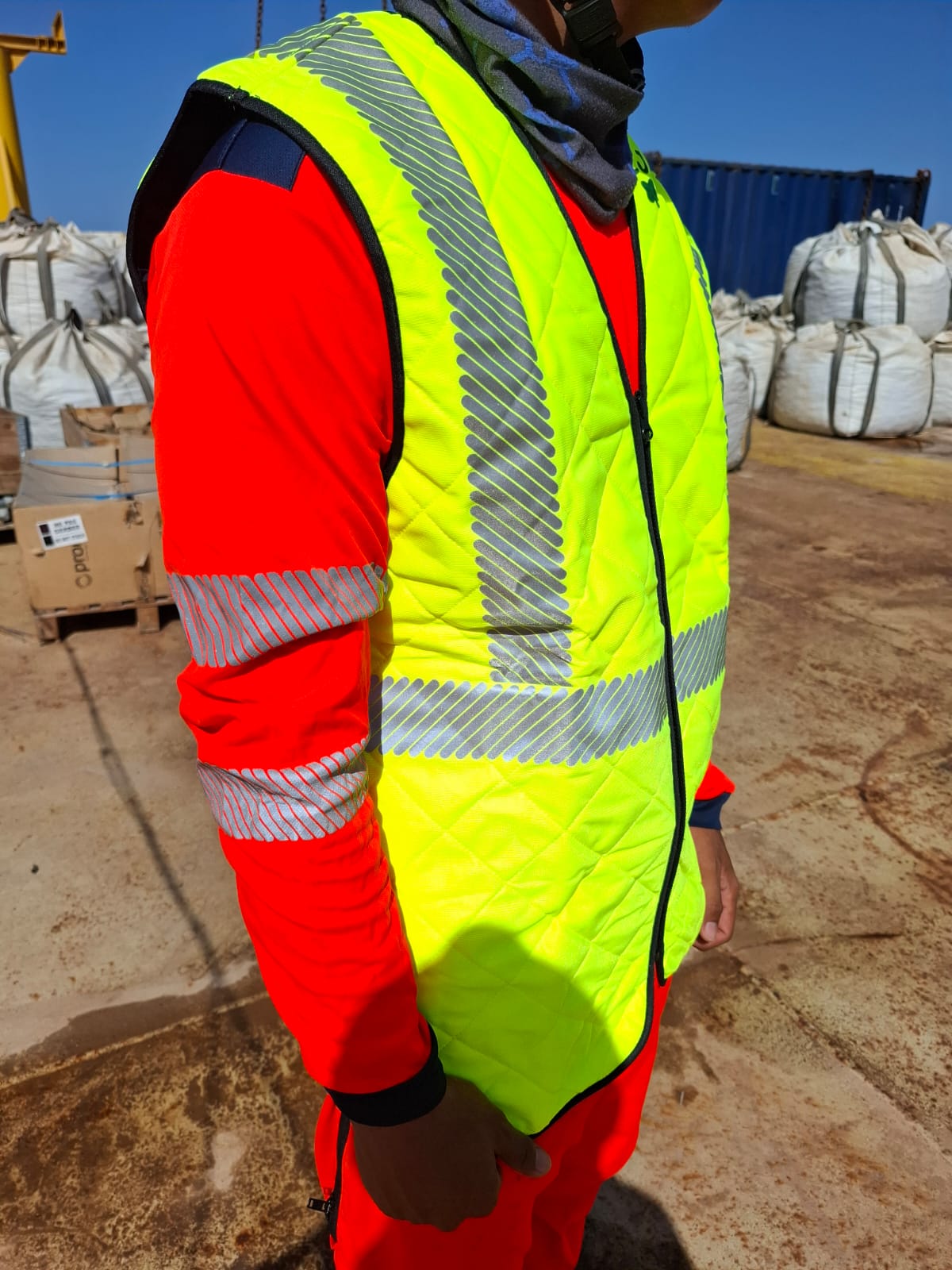
Cooling vests have also been distributed to teams, providing direct regulation of body temperature during periods of intense physical effort or prolonged exposure.
As the project is taking place in a country facing water stress, Geocean integrated this constraint into the worksite organisation from the outset.
To limit the use of local freshwater resources, the teams produce the water needed for their operations directly from seawater, using a reverse osmosis system. In other words, Geocean produces its own freshwater on site.
This solution enables the worksite to meet its operational needs while respecting the local context. It reflects a responsible approach: protecting teams without placing additional pressure on an already sensitive resource.
In this framework, misting systems are used with discernment. They are not a continuous comfort feature, but a targeted heat-risk prevention measure, activated only during the most critical hours of the day.
These measures are not isolated initiatives. They are part of a broader climate risk prevention approach, supported at every level of Geocean’s management — from site supervisors to senior leadership.
This comprehensive approach reflects a fundamental conviction: on an offshore worksite, quality of working life and operational performance are not competing priorities. They reinforce each other.
Taking care of teams in some of the world’s most demanding environments means recognising that the success of any project depends first and foremost on the people who bring it to life.
Geocean is committed to working conditions that meet the demands of its worksites. Discover our health, safety and CSR commitments — or join teams who build differently.
Le 20 January 2026


Le 15 December 2025
Do you have a cooling and heating project? an offshore terminal decommissioning project? a gas terminal project?
Geocean, specialist in marine works, carries out your projects worldwide.
